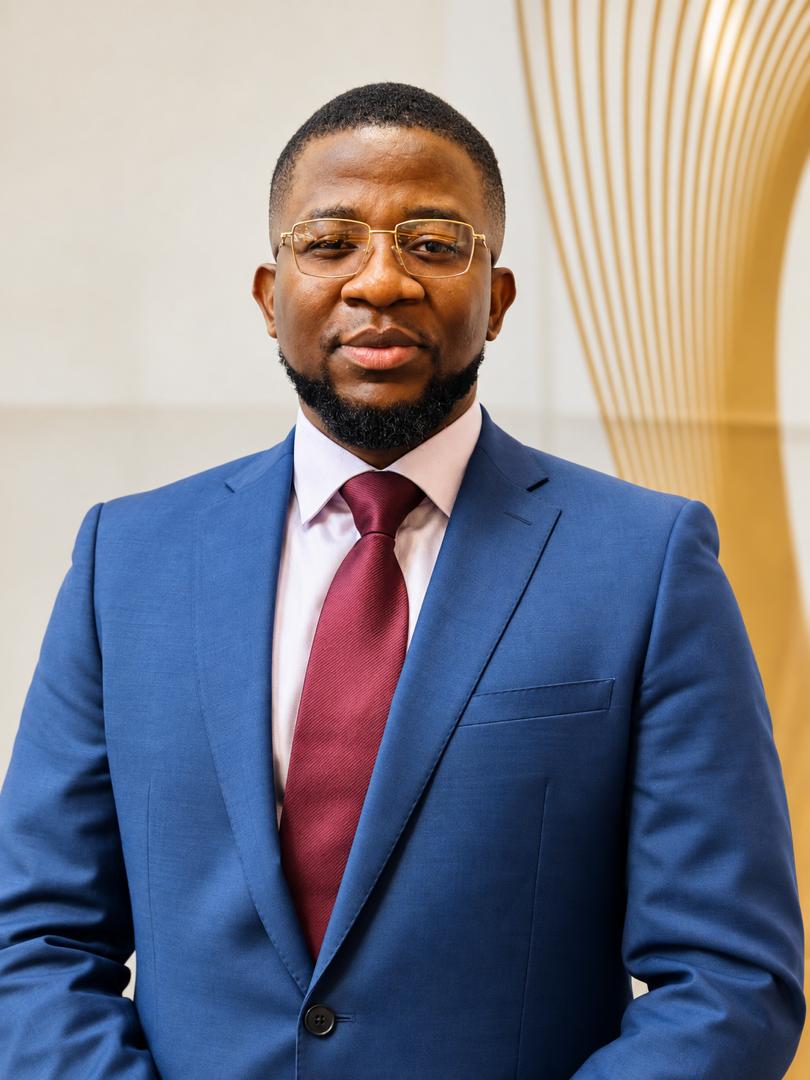
 By
By By Capt. Oyeleke Folajuwon Oluwole
U.S. Army Veteran | Chief Strategist, Foxtrot Shield Limited.
Security Must Move from Reaction to Prevention
Nigeria’s military, police, intelligence services and other security personnel continue to make significant sacrifices in confronting terrorism, banditry, kidnapping and organised criminality.
But modern security cannot be measured only by the response that follows an incident.
A mature security architecture must increasingly ask what happened before an attack, abduction or other emergency. Were warning indicators visible?
Were they detected? Did someone possess relevant information? Was it shared? Were known vulnerabilities left unresolved? Could intervention have occurred earlier?
This is the logic of moving security to the left of the incident – from reaction toward anticipation, detection and prevention.
It requires stronger early-warning systems, better threat assessment, responsible use of open-source intelligence, institutional interoperability, community reporting mechanisms, protection of critical infrastructure and faster dissemination of actionable intelligence.
The most successful security operation may not be the dramatic response seen after an attack.
It may be the attack that never happened because the threat was identified and disrupted beforehand.
The Northwest Shows Why Security Cannot Be Compartmentalised.
One of the most important Nigerian security discussions during UNGA 81 concerned the North-West Peace, Security and Development Framework 2026-2030.
The framework brings Jigawa, Kaduna, Kano, Katsina, Kebbi, Sokoto and Zamfara around a common regional approach linking security with humanitarian action, development, peace building, trust and social cohesion.
The security logic is straightforward.
A criminal network does not stop operating because it reaches a state boundary.
Neither does a trafficking route, an illicit financial network, an extremist recruiter or a disinformation campaign.
Where threats are networked, responses must be coordinated.
The framework also illustrates an important distinction. Development cannot replace security operations, and poverty or exclusion cannot excuse terrorism, kidnapping, banditry or other criminality.
But a good security strategy distinguishes between defeating an immediate threat and reducing the conditions that allow threats to regenerate.
Security operations can suppress violence. Sustainable stability also depends on functioning institutions, legitimate economic opportunity, resilient communities and public trust.
Security and development therefore perform different functions, but they can reinforce one another.
The Sahel Is Nigeria’s Security Neighbourhood.
The same logic extends beyond Nigeria’s borders.
On the margins of UNGA 81, Nigeria and Mali discussed terrorism, violent extremism, organised crime, trafficking, arms proliferation and illicit financial flows across the Sahel and West Africa.
Their discussions also covered regional mechanisms involving ECOWAS, the Alliance of Sahel States and the African Union.
Nigeria cannot treat instability across the Sahel as a distant foreign-policy issue.
A border defines sovereignty; it does not contain risk.
Weapons cross borders, Money crosses borders, Traffickers exploit borders, Extremist networks search for sanctuary, recruits and resources across jurisdictions.
Instability can displace populations, disrupt commerce and weaken governance far beyond the country where a crisis begins.
Political differences within West Africa are real, but so are shared security interests.
Practical cooperation against terrorism, trafficking, illicit finance and arms proliferation remains relevant even when governments disagree on other matters.
Intelligence Must Move faster than the threat,
Nigeria’s national statement at UNGA 81 called for stronger international cooperation against terrorism and other transnational threats, including intelligence exchange, stronger institutional capacity, disruption of the financing of violence and action against illicit weapons flows.
That message points to a central challenge of modern security: threats are increasingly networked while institutions can remain siloed.
Terrorism is networked. Organised crime is networked. Cybercrime is networked. Illicit finance is networked. Arms trafficking is networked.
At home, relevant information must move appropriately between institutions and levels of government.
Regionally, legitimate intelligence cooperation must cross borders.
Internationally, Nigeria benefits from partnerships capable of identifying and disrupting the financial, logistical and technological infrastructure that sustains transnational threats.
Intelligence received after an attack can explain what happened. Intelligence received before it can change what happens.
Migration, Borders and Transnational Crime
Another UNGA 81 engagement showed how the definition of security is expanding.
Nigeria and the European Union discussed a broader migration and security framework covering legal mobility, reintegration, border management and cooperation against irregular migration and transnational organised crime, including proposed information-sharing with Europol.
Migration itself should not be indiscriminately treated as a security threat. Millions of people cross borders lawfully for work, education, family and commerce.
The security concern arises where criminal networks exploit migration routes through trafficking, smuggling, document fraud and other forms of organised crime.
The strategic objective is therefore not simply harder borders. It is smarter border governance: systems capable of identifying criminal exploitation while preserving lawful mobility, legitimate commerce and human dignity.
Economic Security Is National Security
UNGA 81 also reinforced the need to broaden the meaning of national security. Security is certainly about territorial integrity, defence, policing and counterterrorism.
But modern national resilience also includes food, energy, digital systems, critical infrastructure, supply chains, investment and employment.
Nigeria’s engagements on critical minerals illustrate the point. Discussions in New York focused on moving African mineral economies beyond raw extraction toward processing, manufacturing and value addition. Nigeria’s Solid Minerals Ministry also raised mine safety, community recovery and the formalisation of artisanal mining.
There is a security dimension to these economic questions. Poorly governed extractive environments can create openings for illegal mining, environmental damage, exploitation and criminal economies.
Transparent regulation, formalisation, safer operations and legitimate value chains can strengthen both economic and community resilience.
The relationship between security and investment also runs in both directions. Security creates confidence for investment. Responsible investment can contribute to jobs, infrastructure, legitimate commerce and stronger communities. Neither automatically produces the other, but they are increasingly interdependent.
Cybersecurity and the Protection of the Digital State
Nigeria’s UNGA statement included cyber attacks among the transnational threats that exploit gaps between national responses.
That reference should not be treated as a footnote.
As government services, banking, telecommunications, energy, transportation and commerce become more digital, cyber resilience becomes inseparable from national resilience.
A modern security architecture protects not only territory and physical infrastructure, but also data, communications, financial systems and critical digital infrastructure.
The rapid growth of artificial intelligence adds another layer. Nigeria and other African states need technical capacity, regulatory competence and cybersecurity capability if the continent is to participate meaningfully in the systems and rules that will shape the next generation of global security and economic power.
Peacekeeping, Diplomacy and Nigeria’s International Security Identity
Nigeria also used UNGA 81 to emphasise diplomacy, peacekeeping, peacebuilding, mediation and institution-building.
These issues matter to Nigeria’s international security identity.
For decades, Nigeria’s influence in West Africa and beyond has been connected not only to its population and economy, but also to its willingness to commit diplomatic, military and material resources to regional and international peace efforts.
That history is relevant to current discussions about Nigeria’s international role. Influence and responsibility are linked. A country seeking greater weight in global security institutions is also judged by the credibility of its contributions to peace, regional stability and multilateral cooperation.
Africa’s Place at the Global Security Table
Perhaps the most consequential institutional security question raised during UNGA 81 was the structure of the United Nations Security Council.
Nigeria’s national statement called, in line with the African Union’s Ezulwini Consensus and Sirte Declaration, for at least two permanent Security Council seats for Africa, with the rights and responsibilities of permanent membership – including the veto for as long as that mechanism exists – and five non-permanent African seats.
Africa currently has no permanent member among the Council’s five permanent members: China, France, Russia, the United Kingdom and the United States. African leaders again used UNGA 81 to argue that this structure does not adequately reflect contemporary geopolitical realities.
The President of the General Assembly also identified Africa’s underrepresentation as a question of fairness, justice and institutional credibility.
There is an important distinction.
The continental demand for permanent African representation is not identical to the separate question of which African states would ultimately occupy any new seats.
Nigeria can present its credentials, as can other African countries, while the selection question remains a matter for African and international diplomacy.
The larger issue is institutional: whether a body responsible for international peace and security can remain fully representative and effective while an entire continent lacks permanent membership.
The Caribbean Dimension Matters
The argument for African representation is also not confined to Africa. The Caribbean Community has reaffirmed support for the African Common Position on Security Council reform and has stated that Africa’s exclusion from permanent membership must be corrected. CARICOM simultaneously advocates stronger representation for Latin America and the Caribbean and for Small Island Developing States.
At UNGA 81, Barbados Prime Minister Mia Amor Mottley similarly highlighted Africa’s absence from permanent membership while raising the lack of assured representation for Small Island Developing States. She also called for greater investment in prevention, mediation and adequately resourced peacekeeping.
That cross-regional dimension matters because it places the African question inside a wider debate about representation, legitimacy and the distribution of power in institutions created eight decades ago.
For Africa, permanent representation would bring greater influence. It would also bring greater responsibility.
A permanent African voice would carry expectations of credible diplomacy, stronger regional institutions, sustained investment in peace and security capacity and participation in difficult decisions affecting international peace.
Human Security and Trust
The breadth of Nigeria’s UNGA engagements also points toward another important idea: national security ultimately has a human dimension.
Can children attend school safely? Can farmers reach their land? Can traders move goods? Can businesses operate without extortion or disruption? Can displaced people return safely? Can institutions resolve disputes without violence? These are not substitutes for defence or law enforcement, but they are indicators of whether security is functioning in everyday life.
Communities also possess information that formal institutions may not immediately see. Farmers notice unsafe routes. Transporters observe unusual movements. Traditional leaders recognise escalating tensions. Businesses encounter criminal pressure. Schools see threats affecting children.
The challenge is converting that local awareness into credible, lawful and actionable early warning. Community participation should not mean turning civilians into vigilantes or transferring the responsibilities of the state to citizens. It should mean trusted mechanisms through which information can reach legitimate authorities and legitimate authorities can respond.
Trust, in that sense, is not merely a social value. It is a security capability.
The Private Sector Has a Role – and a Boundary
National security remains fundamentally a responsibility of the state.
Private organisations cannot and should not replace Nigeria’s military, police, intelligence agencies or other statutory institutions.
But national resilience extends beyond government. Businesses operate critical infrastructure. Schools must protect children. Financial institutions confront fraud and illicit finance. Technology companies hold sensitive data. Transport and logistics companies operate across vulnerable corridors. Extractive companies work where community relations, economic opportunity and security risk intersect.
Responsible security and risk-advisory organisations can complement public institutions through threat assessment, open-source intelligence, emergency planning, critical-infrastructure protection, school safety, training and organisational resilience. The role is not to substitute for government. It is to help institutions and organisations understand risk, improve preparedness and reduce vulnerability.
The Real Measure of UNGA Begins After New York
UNGA creates access. It concentrates diplomacy. It allows governments, international institutions, investors, development organisations and private-sector leaders to engage within a compressed period.
But attendance is not an outcome. Meetings are not implementation. Declarations are not delivered.
The significance of UNGA 81 for Nigeria will ultimately be assessed through what follows: whether regional security frameworks improve coordination; whether Sahel diplomacy sustains practical cooperation against shared threats; whether intelligence partnerships disrupt financing and weapons flows; whether border cooperation targets criminal networks while preserving legitimate mobility; whether economic agreements strengthen resilient value chains; and whether Nigeria’s international security ambitions are matched by credible contributions to peace and multilateral institutions.
The same applies to Security Council reform. The question is not only whether Africa’s longstanding demand receives rhetorical support, but whether negotiations move toward an institution that more accurately reflects the world it is expected to secure.
Nigeria’s Security Imperative After UNGA 81
The most important lesson I brought home from New York is not about one speech, one governor, one minister or one event.
It is about interdependence.
A community in Katsina or Zamfara is connected to the wider security environment of Northwest Nigeria.
The Northwest is connected to the Sahel. The Sahel is connected to networks of finance, weapons, migration, technology and organised crime that extend far beyond Africa.
Nigeria’s economic ambitions are connected to confidence in security, infrastructure and institutions.
Our digital future is connected to cybersecurity. Our diplomatic influence is connected to our capacity to contribute to peace. Africa’s place in the international system is connected to whether global institutions reflect the world they are expected to serve.
From communities in Northwest Nigeria to the corridors of the Sahel and ultimately to the United Nations Security Council, the same principle applies: security challenges cross boundaries, and effective security architecture must be capable of doing the same.
New York provided the platform. The real measure of UNGA 81 begins after New York.
ABOUT THE AUTHOR
Capt. Oyeleke Folajuwon Oluwole is a U.S. Army Veteran and Chief Strategist of Foxtrot Shield Limited, a security, intelligence and risk-advisory company.
He writes on security, resilience, risk and strategic affairs.
Contact: cof.oluwole@foxtrotshield.com
Foxtrot Shield Limited



2 Comments