




The prolonged dispute over the vacant stool of the Awujale and Paramount Ruler of Ijebuland has taken a new turn, as the Fusengbuwa Ruling House has approached the Ogun State High Court seeking judicial intervention to compel the kingmakers to complete the selection of the next monarch.
The suit, filed as No. HCJ/149/2026 before the High Court of Justice, Ijebu-Ode Judicial Division, also challenges the alleged lockdown of the Awujale Palace by the police, which the ruling house claims was carried out on the instructions of the Ogun State Government.
The claimants are asking the court to declare the alleged interference unlawful and to affirm that the government has no legal authority to halt a selection process that had already commenced in accordance with the provisions of the Obas and Chiefs’ Law of Ogun State 2021.
The legal action follows the death of the late Awujale, Oba Sikiru Kayode Adetona, on July 13, 2025, after which the process of selecting his successor commenced.
According to the court documents, Ijebu-Ode Local Government notified the Fusengbuwa Ruling House on December 2, 2025, that it was its turn to produce a candidate for the vacant stool in accordance with the rotational arrangement recognised under the state chieftaincy law.
The ruling house subsequently commenced its internal nomination exercise and held a meeting on January 12, 2026, within the 14-day period stipulated by Section 16(1)(b) of the law.
The exercise reportedly produced a list of 95 princes and princesses, which was subsequently forwarded to the nine-member Awujale Afobaje Kingmakers Council on January 19, 2026, for the next stage of the process.
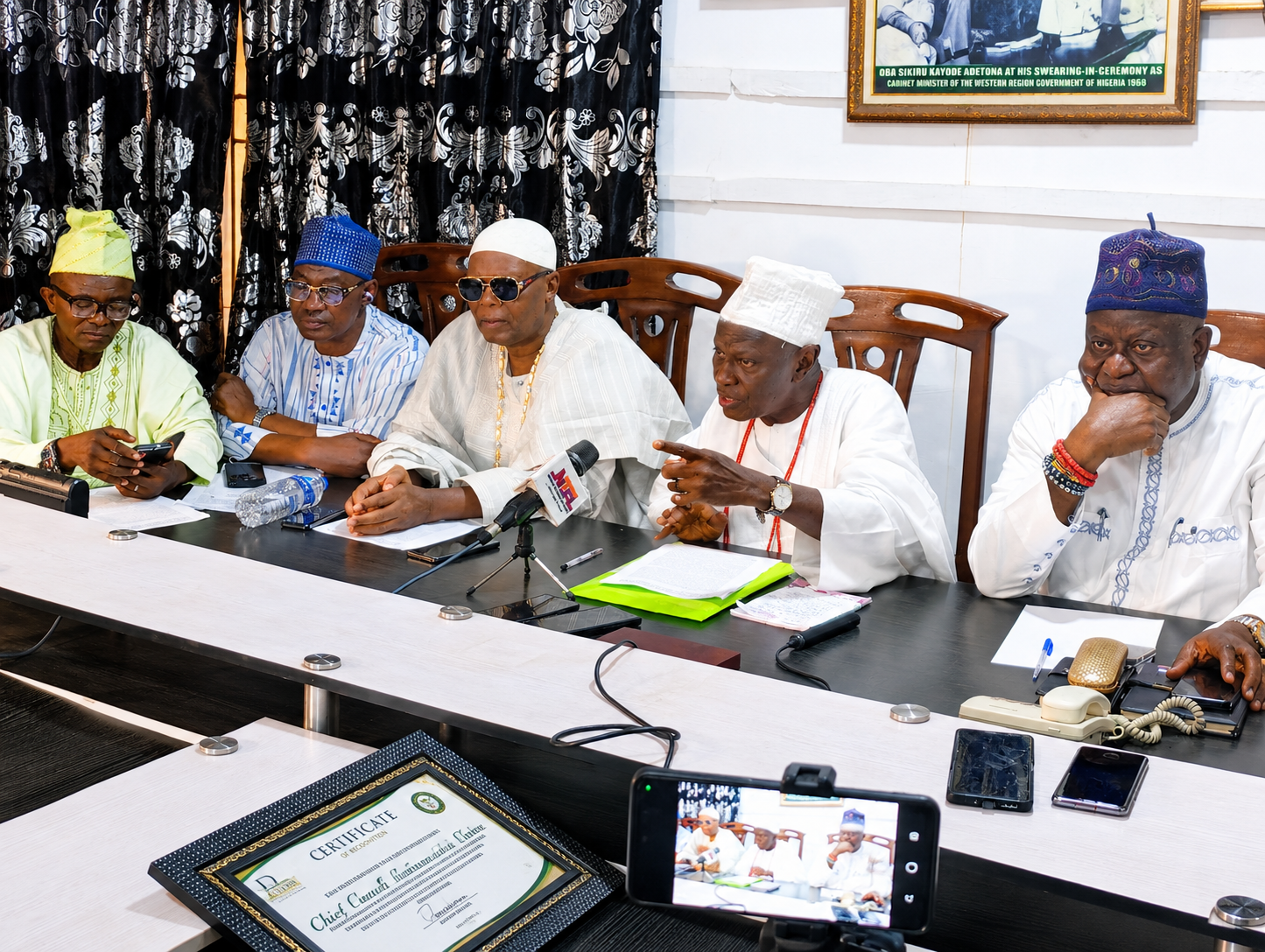
The kingmakers named in the suit include Olor’gun Sonny Kuku (Ogbeni Oja), Chief Rasheed Adesanya (Olisa), Chief Oluwaranti Lekan Osifeso (Olootu Olowa), Chief Jimi Lawal (Olootu Ifore), Chief Abimbola Okenla (Kakanfo Awujale), Chief Kunle Ogunade (Apebi), Chief Agboola Alausa (Balogun), Chief Adebisi Adaran, also known as Gbenden (Ogbeni Odi), and Chief Ayotunde Ola Odulaja (Lapoekun and Secretary of the council).
The ruling house alleged that the kingmakers were prevented from proceeding with their statutory responsibility less than 24 hours after receiving the list.
According to the claimants, police officers entered the Awujale Palace after midnight on January 20, 2026, and prevented the kingmakers from holding their meeting to select a preferred candidate from the list submitted by the ruling house.
A subsequent communication from the local government reportedly cited security concerns as well as allegations of bribery and financial inducement as reasons for suspending the selection process.
The suit names the Executive Chairman of Ijebu-Ode Local Government, Hon. Dare Alebiosu, who the claimants said had earlier approved the commencement of the process on January 6, 2026.
Also named is the Commissioner for Local Government and Chieftaincy Affairs, Hon. Ganiyu Hamzat, whom the claimants alleged later petitioned the Eleweeran Police Station in Abeokuta on February 2, 2026, requesting that the kingmakers and principal officers of the ruling house be invited for questioning.
The Fusengbuwa Ruling House, however, disputes the basis for the suspension.
The claimants maintain that no credible evidence or formal petition establishing the allegations of bribery or financial inducement was presented to justify the stoppage of the process.
They further claimed that investigations by the police and the Department of State Services did not establish any wrongdoing against the ruling house or the kingmakers.
At the centre of the legal challenge is the interpretation and application of Section 16 of the Obas and Chiefs’ Law.
The claimants are asking the court to declare that the nomination exercise conducted by the Fusengbuwa Ruling House was validly completed and that the kingmakers are under a statutory obligation, pursuant to Section 16(1)(e) and (f), to select a candidate from the submitted list and forward the name to the Ogun State Executive Council.
They further contend that the Executive Council is required under Section 22 of the law to act on the selection once the prescribed process has been completed.
The ruling house is consequently seeking an order directing the kingmakers to reconvene within seven days of the court’s judgment and complete the selection process.
It is also asking the court to restrain the Ogun State Government and security agencies from further interfering with the process.
Counsel to the claimants, led by Otunba Olusegun Otayemi, argued that the state chieftaincy law establishes a sequential process involving nomination, selection and approval.
According to the legal team, once the process has been validly initiated and the relevant statutory requirements fulfilled, the parties involved must perform the duties assigned to them by law.
The lawyers also relied on previous judicial decisions, including Menakaya v. Menakaya and Garba v. University of Maiduguri, in advancing their arguments concerning statutory duties and fair hearing.
The suit was filed and sworn to on August 21, 2026, and had not been heard by the court as of the time of filing this report.
Governor Dapo Abiodun is listed as a defendant, alongside the Attorney-General of Ogun State, the Ogun State Executive Council and other relevant government and chieftaincy authorities.
The legal action comes against the backdrop of a series of disagreements surrounding the process for producing the next Awujale from the Fusengbuwa Ruling House.
The development is also likely to intensify calls for clarity over the role of the state government, the kingmakers and the ruling house in resolving the prolonged impasse.
With the matter now before the court, the parties may have to await judicial determination on whether the selection process should resume and whether the actions taken to suspend the exercise were consistent with the provisions of Ogun State’s chieftaincy law.
The defendants’ responses to the claims had not been made public as of the time of filing this report.